Manual clamps are essential tools for securing workpieces in place during welding, assembly, or machining processes. While both stainless steel and steel manual clamps are durable and reliable, their material differences determine their suitability for specific applications. So, which one is right for you? Let’s break it down:
Steel Manual Clamps
Steel manual clamps are known for their high strength and affordability. They’re perfect for heavy-duty applications where corrosion resistance is not a primary concern. For example, steel clamps excel in automotive manufacturing or general fabrication environments where controlled conditions reduce exposure to moisture or harsh chemicals.
Benefits of Steel Manual Clamps:
Application Example:
In a metal fabrication shop, steel clamps can be used to secure sheets during welding or cutting, as the workspace is typically controlled with minimal exposure to corrosive materials.
Stainless Steel Manual Clamps
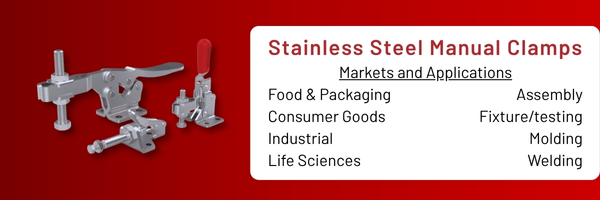
Stainless steel manual clamps offer superior resistance to rust, corrosion, and wear, making them the ideal choice for applications in harsh or hygienic environments. These clamps are commonly utilized in industries like food and beverage, pharmaceuticals, and outdoor construction, where exposure to moisture, chemicals, or fluctuating temperatures is unavoidable.
Benefits of Stainless-Steel Manual Clamps:
Application Example:
Stainless steel clamps are commonly used in food processing to secure machinery parts or components, with their rust-resistant properties ensuring adherence to health and safety regulations.
The Bottom Line
Choosing between stainless steel and steel manual clamps depends on your application. For standard industrial environments, steel clamps provide an economical and reliable solution. However, if your operations involve corrosive materials or require a high level of cleanliness, stainless steel clamps are worth the investment.
At DESTACO, we offer a wide range of clamps to match your needs—no matter the industry or environment.